Varicose Veins
Understanding Varicose Veins
Varicose veins are enlarged, twisted, and dilated veins, most commonly affecting the legs and feet. They occur when the valves inside the veins become weak or damaged, leading to poor blood flow and pooling of blood in the lower limbs. This condition is common in adults and may gradually worsen if left untreated.
Common Symptoms
Visible bluish or purple bulging veins
Leg heaviness or aching pain
Swelling around ankles and feet
Burning or throbbing sensation
Night cramps or itching
Skin discoloration in advanced stages
Risk Factors
Prolonged standing or sitting
Family history
Obesity
Pregnancy
Increasing age
Sedentary lifestyle
While early stages may be primarily cosmetic, advanced varicose veins can lead to skin changes, ulcers, or bleeding, making timely evaluation important.
Laser Ablation for Varicose Veins – Brief Introduction
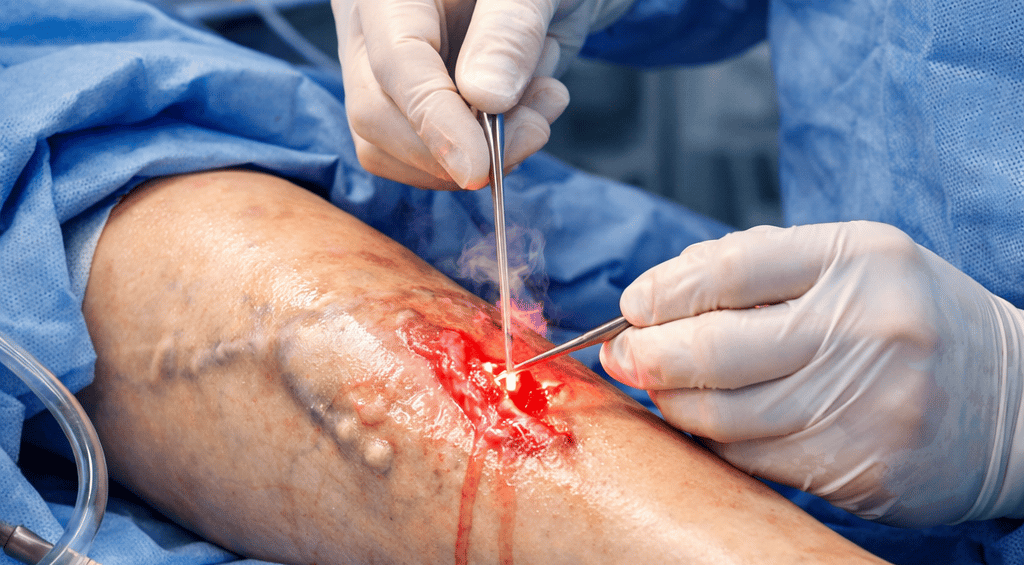
Laser ablation, also known as Endovenous Laser Treatment (EVLT), is a minimally invasive and highly effective procedure used to treat varicose veins. It uses targeted laser energy delivered through a thin fiber inserted into the affected vein to seal and close the faulty vein, allowing blood to naturally reroute to healthy veins.
Key Advantages
No large surgical cuts or stitches
Minimal pain and bleeding
Day-care procedure with quick discharge
Short recovery time – return to normal activities within 1–2 days
Excellent cosmetic results
High success and low recurrence rates
Procedure & Recovery
Performed under local anesthesia with ultrasound guidance
Duration typically 30–60 minutes
Patients are encouraged to walk immediately after the procedure
Compression stockings may be advised for a short period
Most individuals resume routine work very quickly
Laser ablation is considered a safe, modern, and patient-friendly alternative to conventional vein surgery, offering effective relief from symptoms with minimal downtime.
Help
We're here for your medical equipment needs.
Contact
Connect
sales@canarasurgicals.com
+91 74839 35138
© 2025. All rights reserved Canara Surgicals Powered by www.growthhood.com